The other day I sat down with one of my favorite architecture professors at Cartel Coffee and we talked about the two worldviews that architects have. One worldview is that the object (the building, the site, the addition, etc.) is supreme. The other is that experience of inhabiting the object is supreme.
For example, if you look at Frank Gehry’s work, he is in the “object” camp. He creates interesting forms for the sake of creating interesting forms. How people actually inhabit and experience that form is not really the point. Fredrick Law Olmstead, on the other hand, designed experiences not objects. I’ve been to a few parks that were designed in the Olmstead tradition, like Laurelhurst Park in Portland, OR, and they’re full of special moments. The interface with Olmstead’s parks is internal, it’s all about how the spaces make you feel – the view of ducks on the lake with a trail of baby ducks behind them, walking on a curvy footpath obscured by tree branches, standing on a hill looking down at a field of people playing frisbee or sitting on a park bench surrounded by giant pine trees. You don’t even know what the entire park (the object itself) looks like unless you look at a map of it. And even when you do, the actual park as an object is meaningless. It’s the sensory experience of inhabiting the “object” that matters.

Laurelhurst Park in Portland, OR. Photo from Wikimedia Commons
As you can probably tell, I’m an “experience” kind of architect. What excites me isn’t creating a interesting objects but creating special moments in buildings that impact the daily lives of my clients and their end users. This is the driving force when I design restaurants that encourage chance encounters with strangers who may become friends, create a workplace that will feel energetic and positive with high ceilings and lots of daylight, or bring the outdoors inside through big views and openings into a backyard.
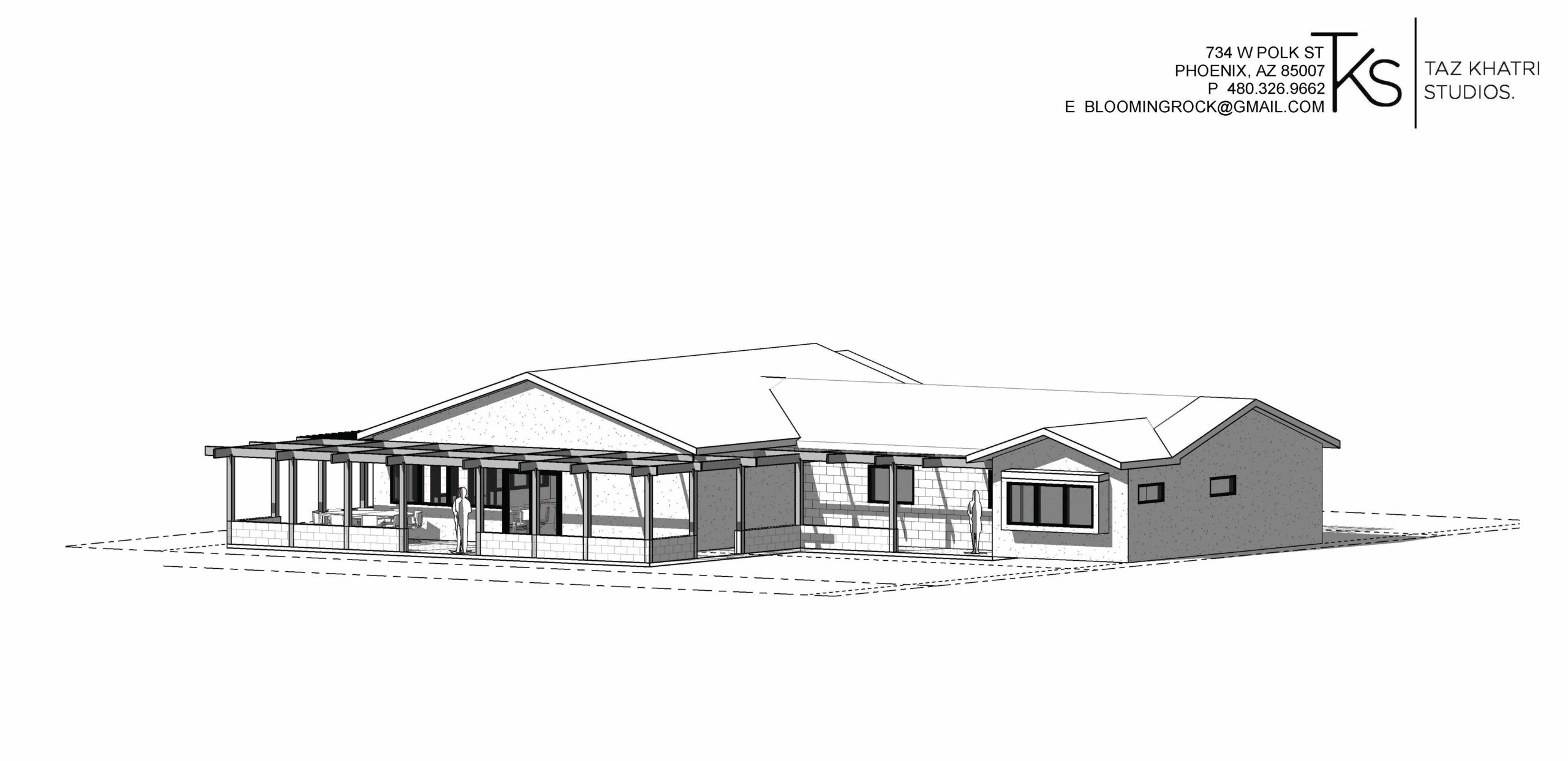
In a remodel and addition I designed in the Willo Historic District that is currently under construction, our client wanted a private sanctuary while also being able to host her friends and community in the house when she wanted to. With this in mind, both the living room/kitchen/back patio spaces and the primary bedroom suite became focal points. Along with our client we imagined what it would be like for her to host an intimate dinner party for her closest friends, a Spring barbeque in her back yard, or just to spend a cozy night in sipping wine and reading a book.
Subsequently I designed spaces that would facilitate special experiences for her and her guests, such as the large covered patio which would serve as a second living room for guests in nice weather and at the same time serve as a private patio where our client could meditate in the morning. The primary bedroom and bathroom were designed specifically to fit our client’s needs with “hers and hers” sinks and primary closets. The primary bath is even outfitted with a special make-up counter.

Floor Plan of Addition. Image by TKS
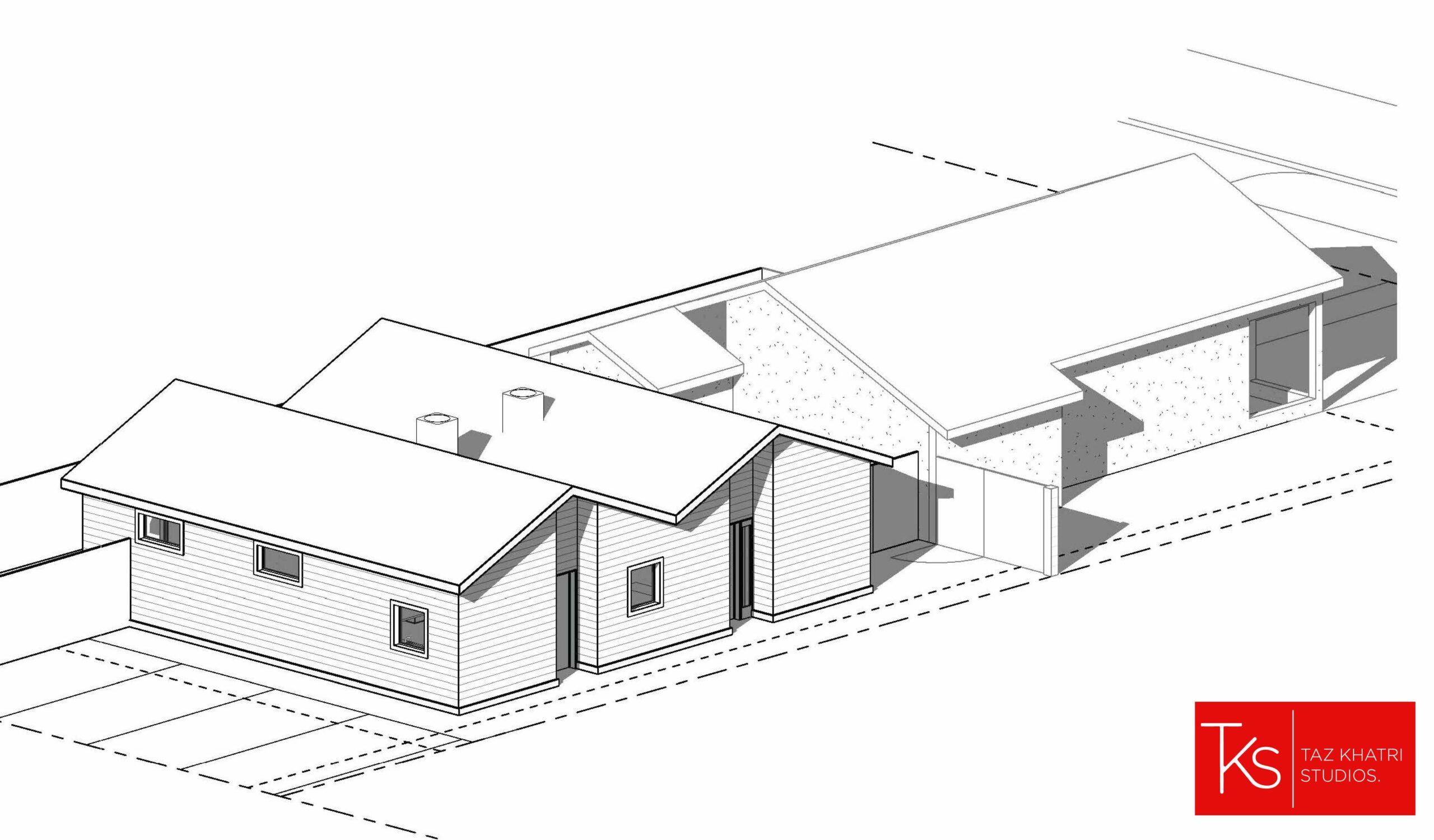
The details of our client’s daily life experience were at the forefront of my mind when designing her route into the house. We placed a simple covered entrance into the house close to where she would park her car. We integrated a counter and a cabinet next to the entrance where she can offload her keys and purse and begin relaxing in her home environment. At first we were going to leave out the roof over the entrance but I remembered how inconvenient it is when you’re fumbling for your keys while it’s raining and how nice it feels to take refuge under some cover.

3D View of Side Entrance to Addition. Image by TKS
This is not to say that we don’t enjoy creating beautiful buildings at TKS but we do so from the inside out. We create beautiful moments for our clients that impact their daily experience and thereby put together a beautiful building. We create special sensory experiences at each corner of the site, building, addition, or remodel, like Olmstead, instead of designing an object first and trying to fit the daily lives of our clients and their end users in as an afterthought.
Author: Taz Khatri